Health Awareness




In this issue
-
s Sponsored
More Than You Can Imagine: The Unseen Work That Gets Rare Disease Medicines to Patients
This article was developed and funded by Norgine to support enhanced access to rare disease medicines in Europe and beyond. When we think of innovation in healthcare, the image that often comes to mind is a scientist in a laboratory, discovering a breakthrough molecule that could change lives. And while that moment of discovery is...
-

Rare disease and the undeniable force of patient advocacy
Something remarkable is happening in rare disease research. It’s not coming from big pharmaceutical companies or research universities — it’s being led by families fighting to save their children’s lives. What started as a handful of desperate parents pooling their savings and organising fundraisers has grown into a powerful movement changing how treatments get developed....
-

Supporting those who carry the weight of rare disease
“This is our one chance. We have to make it count.” These words have crossed all our minds, defining a sense of pressure, a focus point and a pivotal moment. Whether said during a vital work meeting, exam, or even a sporting event, these words represent a time when we take the weight of expectation...
-
Youth Driving Global Rare Disease Change
Youth advocates with lived experience of rare diseases are mobilising globally to drive positive change. Of the almost 7,000 rare diseases, 70% appear during childhood, and only 5% have a recognised treatment. Reality of rare diseases for young people As young people living with congenital rare conditions, we understand its challenges: the fear of an...
-
How we’re using artificial intelligence to advance rare disease research
Artificial intelligence (AI) holds great potential to advance rare disease research. Here’s how scientists and physicians are using AI to improve outcomes for people living with rare diseases. How is AI used in rare disease research? Dr Kaminski: AI encompasses a broad set of applications. Scientists and physicians are using sophisticated computer vision or wearable...
-

s Sponsored
Redefining the rare disease launch to reach every patient
Dr Saiqa Khan, Head of Growth, Global Marketing, at Avalere Health, explains why success in rare disease can no longer be measured by strength of data or time to diagnosis. It must be measured in the number of lives transformed. Rare diseases represent one of healthcare’s most complex frontiers. The umbrella term rare disease covers...
-
s Sponsored
Truth and trust go hand in hand in rare disease information
Pharma companies must deliver rare disease education and awareness information accurately and authentically. Otherwise, it risks being more harmful, rather than helpful. Alchemist Consulting helps pharmaceutical companies deliver compliant disease education, support and awareness information to rare disease patients, carers and the public. Authentic portrayal of rare disease “Pharma companies often produce information about a disease...
-

s Sponsored
Connecting, cycling and changing children’s lives
Thousands of children across the UK are living with rare and devastating diseases that have no cures. Ten-year-old Digby is one of these children. Digby is living with Duchenne muscular dystrophy, a rare genetic condition causing muscles to weaken over time. Digby’s journey with Duchenne began when he was aged two and his mum, Lisa,...
-

Reality series star Andy Ryan reveals rare KTWS diagnosis
Andy Ryan of The Great British Bake Off shares his experience of living with Klippel-Trenaunay-Weber Syndrome (KTWS), a rare condition affecting around 1 in 100,000 people in the UK.1 Andy reached out to Beacon for Rare Diseases to share his journey, which highlights just how vital community is. KTWS currently has no UK-based support group,...
-
The vision for a competitive Europe that rare diseases offer
Rare diseases offer Europe a strategic edge — fuelling biotech, genomics and AI innovation. Learn how a new WHO resolution could shape future healthcare systems and competitiveness. Across Europe, rare diseases are being recognised as more than a quest for social justice. They are emerging as a strategic opportunity — a lever for scientific excellence,...
-
Diagnosing the world’s forgotten children through genomic testing
Denying children a diagnosis because of where they live is unconscionable. Genomic testing must be a global right to tackle this issue. Around the world, over 250 million people, mostly babies and children, live with undiagnosed rare genetic conditions — most of them in low-resource settings. Their suffering remains unseen, and their lives are often...
-
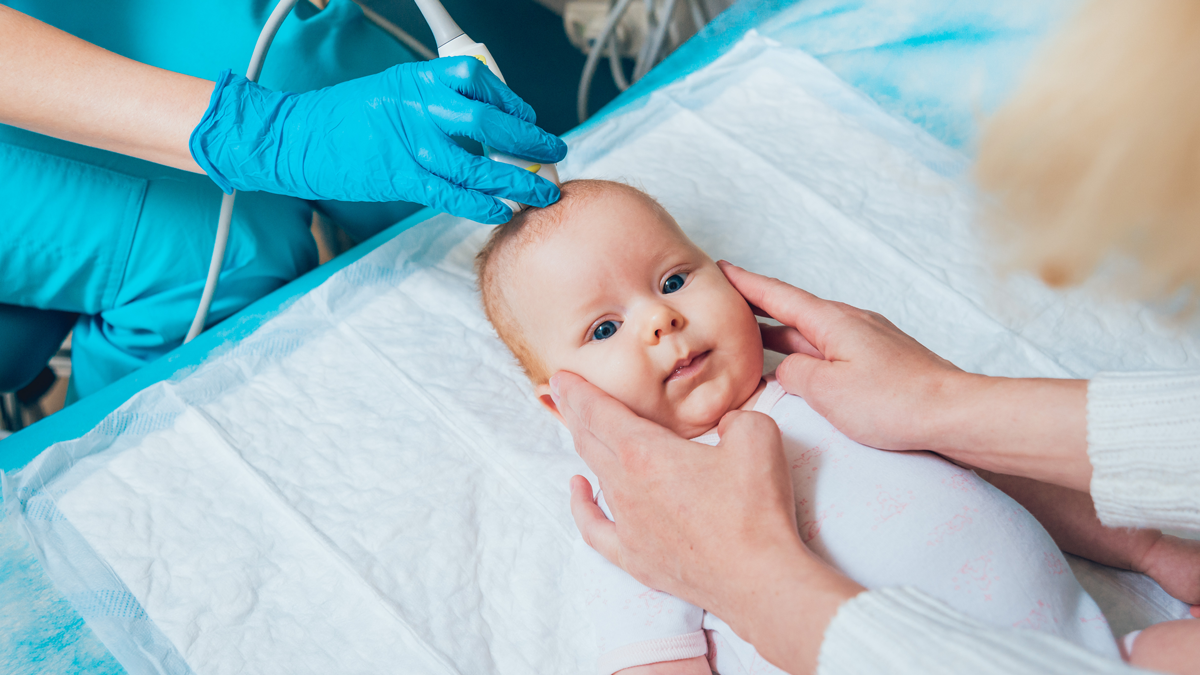
Building the evidence for genomics supporting newborn screening
A study led by Genomics England in partnership with NHS England is looking to understand whether we can improve the ability to diagnose and treat genetic conditions from birth. Following the Generation Study’s launch in 2024, we’re seeing real impact for families living with rare conditions. Earlier diagnoses and treatment The Generation Study is looking...
-

Improving equity for rare diseases through global policy
People living with rare diseases face challenges accessing diagnosis, treatment and care. A new World Health Assembly (WHA) resolution offers hope — but action must follow. “This is our reality — a constant roller coaster ride.” That’s how Ida Fransson and Mats Jansson of Sweden describe the experience of searching for answers for their two...
-

s Sponsored
The role of rare disease education in the diagnostic odyssey
For a child with a rare disease, a doctor’s continuing education can end a years-long diagnostic odyssey and unlock access to vital care. A harmful adage in diagnosis In medical school, doctors are taught, ‘When you hear hoofbeats, think horses, not zebras,’ guiding them to focus on diagnosing common conditions and to discard the possibility...
-

s Sponsored
AI-powered drug discovery company in phase 2 clinical trial for NF1 treatment
Drug development company utilises AI discovery engine to find treatments for rare disease, celebrating milestone phase 2 clinical trial for potential neurofibromatosis type one (NF1) treatment. Innovation is urgently needed for conditions with limited or no treatment options. A breakthrough in this space comes from Healx, a Cambridge-based biotech pioneering AI-driven drug discovery, which has...
-
s Sponsored
Protected: Joining the dots for patients living with rare primary immunodeficiencies
There is no excerpt because this is a protected post.
-

s Sponsored
Shining a light on rare cancers: the role of continuing medical education
A rare cancer is defined as one diagnosed in fewer than six out of 100,000 people annually — accounting for roughly 24% of all cancer diagnoses in Europe.1 Managing and diagnosing rare cancers presents unique challenges, often leading to delays in treatment. A global survey conducted by Medscape among 117 oncologists revealed that the biggest...
-
s Sponsored
Children’s charity campaigns for awareness and education of NF1
Neurofibromatosis type 1 (NF1) is one of the most common genetic conditions. Yet, the condition remains under-diagnosed and often mismanaged, according to a children’s charity. Although classed as a rare disorder, NF1 is one of the most common genetic conditions. Despite its prevalence, approximately one in 3,000,1 NF1 remains largely under-recognised and under-diagnosed, which can...
-

s Sponsored
Integrating patient insights into rare disease research drives meaningful change
Incorporating patient voice into rare disease drug development can drive more meaningful progress, explains Cecilia Jimenez-Moreno, Associate Director at Kielo Research. Can you provide an introduction to what your research is about? Kielo Research is a boutique consultancy specialising in integrating patient voice into drug development. As a highly focused team, we apply unique methodologies...