Health Awareness
Innovations in Oncology Q4 2021
-

s Sponsored
Helping cut the cancer care backlog with new upright approach
Smaller and more mobile upright radiation therapy equipment could prove to be an important factor in helping reduce backlogs of cancer care created by the COVID-19 pandemic. Delivering radiation therapy to patients in an upright position could increase the potential for mobile treatment and speed up access to cancer care. With thousands facing treatment delays,...
-

Ensuring oncologist training keeps up with innovative practice
As treatment innovations transform cancer care, innovations in curriculum design are transforming the training of oncologists. Clinical and medical oncologists focus on different aspects of cancer care, with clinical oncologists being the sole providers of radiotherapy. The Royal College of Radiologists’ new curriculum for clinical oncology (CO), introduced earlier this year, ensures the next generation...
-

s Sponsored
New one-day next generation sequencing technology transforms lung cancer care
Next-generation sequencing (NGS) technology is being implemented across the country thanks to massive investments by the NHS is cancer care and rare diseases. The roll out of a new hub and spoke model of genetics laboratories across England has gone hand in hand with significant investment in precision medicine, boosting the speed and accuracy of...
-

s Sponsored
Help improve access to personalised therapies for cancer patients
Advances in technology have the potential to lead to greater democratisation of personalised medicine as biomarker targeted therapies become more widely available. Delivering personalised therapy to cancer patients can involve complex medical and scientific processes. Advances are now enabling innovative techniques to be made more widely available in what the scientific community regards as greater...
-
s Sponsored
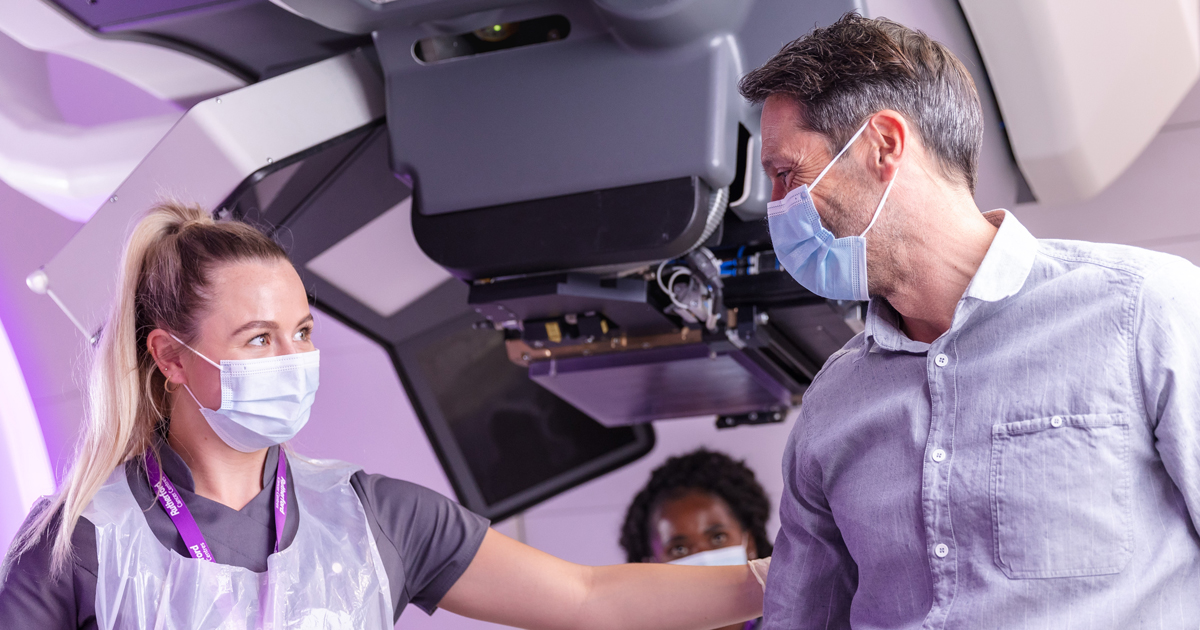
New ways of delivering radiotherapy treatment could improve patient wellbeing
When it comes to treating cancer, we know that approximately 50% of cancer patients will undergo radiotherapy treatment. However, the method in which they receive this, in terms of type, time and dose, is constantly changing. Every day, we, as clinicians and healthcare professionals, innovate. Whether that be something big or small, like developing a...
-

Optimising clinical trials for greater inclusiveness in cancer care
Clinical trials are our best tool to improve cancer care for patients through testing the clinical value of a new treatment or intervention. However, eligibility criteria are overly restrictive. One year ago, the approval of the first COVID-19 vaccine was fuelling debate in the oncology community about whether it was safe or efficacious to immunise...
-

Radioligand therapy – inequitable access to effective cancer treatment
Radioligand therapy is a rapidly developing field of cancer treatment which combines a tumour killing radio-nuclide with a ligand which targets the cancer cell. However, there are concerns over equitable access to these treatments in the UK. Over the past decade a new form of anti-cancer treatment has been developed which combines the best of...
-

Liver transplantation: A new treatment for unresectable liver metastases
Liver transplantation is providing further options for patients with unresectable liver metastases. Over the past few decades, the outcomes following liver transplantation (LT) have improved. Five-year patient survival rates in the UK are greater than 80% for adult first-time transplants from deceased donors; hence, indications for transplantation are expanding. New hope for patients Since 1996,...
-

s Sponsored
Advancing cancer care through clinical trials
Cancer patients are accessing unique opportunities for individualised care through participation in ground-breaking clinical trials. Taking part in clinical trials is increasingly being seen as a critical step in offering greater individualisation of care for cancer patients. With one in two people in the UK likely to have cancer at some point in their lives,...
-

s Sponsored
Enabling a greater choice for patients in clinical trial design
Digital technology is leading to broader diversity in recruitment for clinical trials and enabling patients to have a stronger voice in design of modern medical studies. With a growing recognition that patients have a pivotal role to play in the design and development of clinical trials, specialists who recruit to trials also point to the...
-

Cancer trials are a casualty of COVID-19
Recruitment onto cancer trials has dropped by nearly 60% during the pandemic. But COVID-19 also offers clues to a recovery that can get new treatments to cancer patients more quickly. The response to COVID-19 has proven that science can move in leaps and bounds when it’s properly funded and prioritised — transforming patients’ lives with...
-

s Sponsored
Secondary breast cancer: join us to tackle this incurable disease
There is no time to waste in unravelling the complexities of secondary breast cancer to stop thousands of people dying from this devastating disease each year. Each month around 1,000 women and seven men die from incurable secondary (metastatic) breast cancer in the UK, and we’re concerned not enough progress is being made to tackle...
-

Proactive planning for the future of cancer care
The NHS must focus on readiness and data-driven planning across the entire system to prepare cancer services for new treatment approaches. Readiness and resilience take on particular significance in the context of cancer care, as they help ensure continuity of care and adaptability of services despite external forces and change. The COVID-19 pandemic has brought...