Health Awareness
Skin Health Q2 2022
-

Improving education and awareness around skin of colour
To improve diversity and inclusion, we must make sure skin health information is available to all, regardless of skin tones. 1. What are some of the misconceptions or /assumptions around skin of colour amongst the general public? That skin of colour does not need sunscreen. The misconception that melanin in our skin is all protective and...
-

s Sponsored
Increasing awareness and education of actinic keratosis
Actinic keratosis is one of the most common diagnoses made by dermatologists in Europe and its prevalence can be calculated to be around 18% of the population in this continent. Actinic keratosis (AK) is a common skin condition caused by sun damage occurring mainly in skin areas chronically exposed to ultraviolet (UV) radiation. Despite being...
-

s Sponsored
Finding an innovative approach to skin cancer care
A non-invasive treatment for skin cancer could improve the patient experience and lead to enhanced quality of life. Traditionally, people with non-melanoma skin cancer face several courses of outpatient treatments, including surgery or radiotherapy, with more vulnerable patients admitted to hospital overnight. Now, a new trial of an innovative patient-friendly therapy will be held at...
-

Applying sun protection: the habit that all sportspeople need
If you enjoy a healthy outdoor lifestyle, ensure your kit bag includes sun protection, closing the door on sunburn and the risk of skin cancer. Many of us believe that sun protection is only relevant when on a beach holiday because that is how it has been sold to us and our parents before us....
-

s Sponsored
A reconstructive innovation is giving skin cancer patients another option
A synthetic dermal scaffold used in reconstructive operations is providing an effective alternative for skin cancer patients who, until recently, had no surgical options left. Patients who undergo numerous operations to remove multiple skin cancers can have increasingly complex reconstructive needs, admits Mrs Aenone Harper Machin, consultant plastic surgeon, St Helens and Knowsley NHS Trust....
-

s Sponsored
A new app helps you understand your skin microbiome
Understanding your unique skin microbiome can literally save your skin and save money too. Do you know your skin type? Of course you do – but think again. Research shows that nearly two in three women (63%) do not know their correct skin type. That means many are wasting money on unsuitable skincare products –...
-

s Sponsored
A new approach is needed to assess the risk of pressure ulcers
Sponsored by: Pressure ulcers are more likely to be missed in people with darker skin tones because of the technique used to assess the condition, according to research. Pressure ulcers are traditionally assessed through red discolouration on the skin, this approach results in them being missed, or picked up later, especially in people with darker...
-

Skin cancer – top tips to reduce your risk and detect the early warning signs
Skin cancer is the most common cancer in the UK. One in five of us will develop skin cancer in our lifetime, yet around 90% of cases are preventable and 98% treatable or curable if detected and diagnosed early. Here are our top six tips to reduce your risk and detect the early warning signs: ...
-
Don’t wait to seek support for your acne
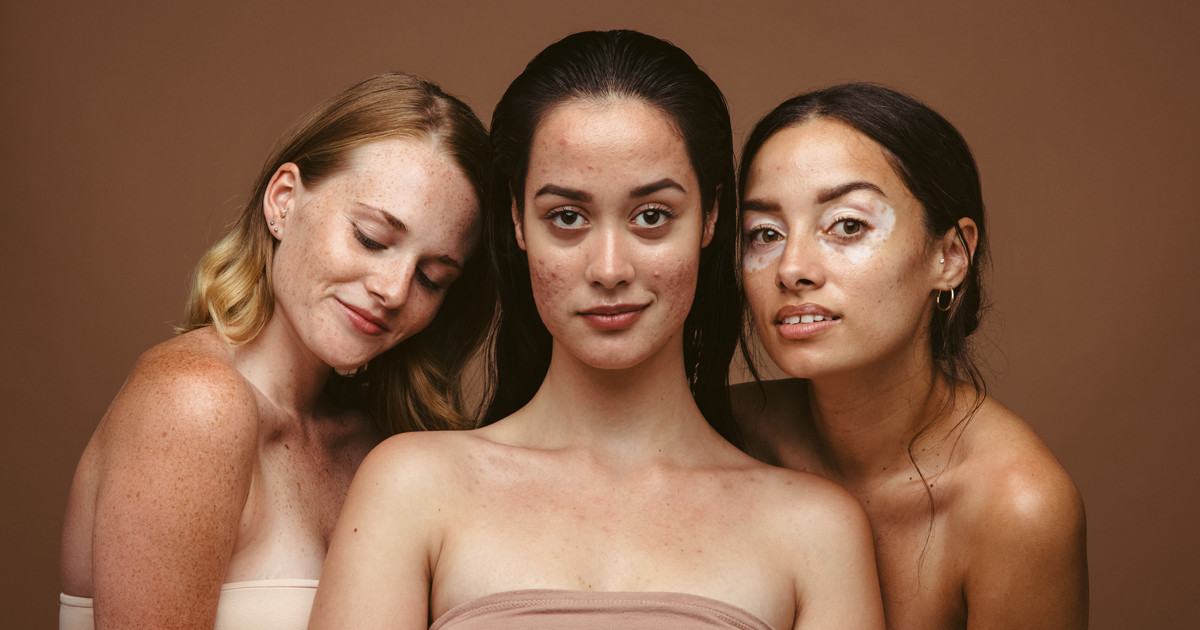
Acne affects more than 640 million people worldwide and this incidence is increasing. Although it typically begins around the time of puberty, it can affect all ages. Acne is an inflammatory disorder of the skin’s oil producing (sebaceous) glands. It predominantly affects face, back or chest, presenting as red spots (papules or nodules), yellow heads...
-

How to look after your skin during menopause
Menopause is defined as one year after a woman’s last menstrual period and in the UK the average age is 52. The decline in oestrogen (oestradiol) is the defining feature, which can have an impact on your skin. Oestrogen has a multitude of effects on the skin via oestrogen receptors present in the nuclei of...
-

Nutrition and psoriasis: does diet play a role?
Research suggests that gut health could play an important role to play in skin health, particularly for people living with psoriasis. Psoriasis is a chronic inflammatory skin condition which affects around 2% of the population in the UK. It can lead to sore, itchy patches of skin and can have a considerable impact on a...
-

Four easy steps for your summer skin routine
Summer is a time when we want to let our naturally beautiful skin shine through. These simple steps can help to achieve that, regardless of your skin type. 1) Exfoliate to remove dead cells Dead skin cells accumulate on the surface of our skin, making it look dull. This can become more problematic as we...
-

Lack of support for people living with a skin condition
Living with a skin condition can have a devastating impact on mental health and wellbeing, but with the right support this needn’t be the case. Growing up in a society that places so much value on how you look can be tough. When you have a visible difference, like a skin condition that affects your...
-

Changing public awareness of skin health over the years
Skin health was not a common topic a few decades ago, but through advancements in technology, scientific research and cultural shifts, we are now understanding the importance of taking care of our skin. Head back 25 years and you would find a world where the Spice Girls are still together, Titanic is in the cinema...
-

The best emollient is the one a patient will use
Emollients are an integral part of treatment for all dry skin conditions. They often get overlooked and not enough attention is given to their importance. An emollient is a product that helps to hydrate the skin by either trapping moisture in the skin called occlusion or increase the amount of moisture in the skin...