Health Awareness
Cardiology
-

Ensure every student leaves school with CPR training
Too many young people are leaving school without learning CPR — a vital, lifesaving skill. Without better support and monitoring, policies alone won’t close the gap in training. Even though governments and local authorities across the UK introduced policy in 2019 to make sure CPR is taught in secondary schools, too many students are still...
-

Patient empowerment: take control of your CVD risk
Over 7.6 million people live with cardiovascular disease (CVD) in the UK. CVD accounts for one quarter (26%) of all deaths in the UK.1 Are lipids important for CVD risk? ‘Lipid’ is a medical term meaning ‘blood fats.’ While there are numerous blood fats in the body, cholesterol is the most common. Raised cholesterol is...
-
Harnessing digital innovation to transform cardiovascular rehabilitation
Cardiovascular rehabilitation (CR) is a structured programme of education, psychological support and exercise and is a key part of recovery for individuals who have experienced a cardiac event or procedure. Cardiovascular rehabilitation aims to reduce risk factors and support long-term heart health. It plays a vital role in reducing hospital readmissions and mortality. Importantly, CR...
-

Petitioning the heart health case
Cardiovascular disease (CVD) can strike anyone, at any age, and is still claiming the most lives — around 20 million every year — yet it’s a fight we can win. Healthy lifestyles, environments and proper care access will reduce the toll of cardiovascular disease (CVD), the top cause of death and disability that is stealing...
-
Testing for heart conditions in seconds
Cutting-edge technology promises faster diagnosis of heart conditions using smart stethoscopes and cheek swab tests to detect heart failure and arrhythmogenic cardiomyopathy (ACM) early. A new version of the humble stethoscope, first invented more than 200 years ago, can boost the diagnosis of heart problems, while a cheek swab can flag a heart condition in...
-

s Sponsored
Personalised health coaching based on individual biomarkers promotes longevity
Health technology company uses metabolic signatures and predictive health biomarkers to enhance user longevity, delivering personalised interventions tailored to each user’s individual health data. The concept of longevity is rapidly transitioning from a niche of the wellness industry to a global public health priority. This transition comes in light of ongoing healthcare challenges, namely an...
-
s Sponsored
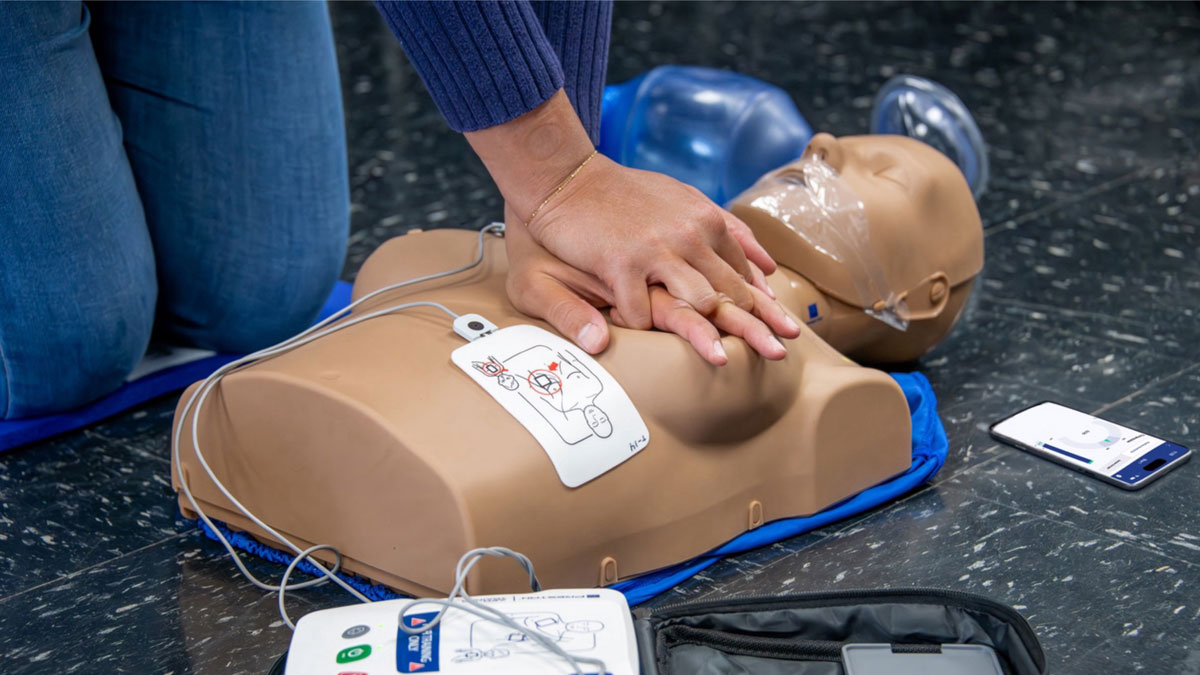
How gender-inclusive CPR training can save more women’s lives
Improve cardiopulmonary resuscitation (CPR) training with the right tools that can overcome gender barriers and enable life-saving CPR for women during cardiac emergencies. Cardiovascular disease remains a leading cause of death for women worldwide. Yet, only 44% of women recognise it as their greatest health threat.1 More troubling, women are significantly less likely to receive...
-

Future-proofing the cardiology workforce with research and tech skills
Heart medicine relies heavily on research and innovation in bringing new treatments and life-saving procedures to patients with heart and circulatory diseases. In the UK, clinicians and academics have been at the forefront of international research. When I trained as a cardiologist, we were expected to take extra time to complete a research project and...
-

Why TAVI could be the best option for aortic stenosis patients
After being diagnosed with a life-threatening heart condition, Thomas Farmer had a quick and painless procedure known as TAVI. According to him, the results have been nothing short of ‘incredible.’ Farmer says he found out about his heart problem by accident. It happened around two years ago when he visited A&E after a fall, and...
-

s Sponsored
Photon-counting CT scanners are revolutionising heart diagnostics
The latest computed tomography (CT) scanning technology offers cutting-edge diagnostics to heart patients, allowing doctors to see tiny moving structures in vivid high-resolution. London’s Royal Brompton Hospital, part of Guy’s and St Thomas’ NHS Foundation Trust, is the UK’s largest specialist heart and lung centre and consistently takes a pioneering approach to medical technology. It’s...
-

Introduction of routine scan has prevented thousands of heart attacks
We estimate around 6,000 heart attacks in the UK have been avoided in the last decade,1 thanks to the introduction of new a routine heart scan. Coronary computed tomography angiogram (CCTA) scans help doctors to identify coronary heart disease, narrowing and blockages in the arteries that supply the heart with blood. If left untreated, coronary...
-
s Sponsored
The future of heart health with AI-powered devices and treatment approaches
Artificial intelligence (AI) is revolutionising the field of cardiology, offering new hope for patients with cardiovascular disorders. AI is no longer futuristic, it’s a real-world tool, transforming patient care and outcomes. One of the key areas where AI is making a significant impact is in the early detection of cardiovascular diseases (CVD). Traditional methods often...
-

Women are underdiagnosed, undertreated and under-represented in heart disease
A landmark consensus in Heart1 (BCS/BMJ) confirmed that, despite heart disease being the leading cause of death in women, they remain underdiagnosed, undertreated and underrepresented in all aspects of care. The article showed that women are less likely to receive life-saving treatment in an emergency, less likely to be given medication to prevent a heart...
-

Atrial fibrillation affects 1.4 million people in the UK and likely to double by 2030
Currently, up to 30% of individuals who have atrial fibrillation (AF) are undiagnosed and are at risk of complications, such as an AF-related stroke. So, it is important to know your pulse to know your heart rhythm. What is atrial fibrillation? Atrial fibrillation, or AF, is a heart condition that causes an irregular and often...
-

Giving cardiac devices — and people — a second chance at life
We can make a lasting impact on the health and wellbeing of people in low and middle-income countries (LMIC) by recycling pacemakers, which are currently put into landfills. Recycling explanted cardiac devices to countries where they would not otherwise have the opportunity to receive treatment for heart rhythm disorders can provide valuable medical support. Inequity...
-

s Sponsored
Novel procedure provides tricuspid valve repair without surgery
New minimally invasive procedures can repair tricuspid valve regurgitation, a potentially serious heart condition — and avoid the need for open-heart surgery. There’s a good reason why the tricuspid heart valve is known as ‘the forgotten valve’, notes Dr Robert Smith, consultant interventional cardiologist based at Royal Brompton and Harefield hospitals, part of Guy’s and...
-

Addressing inequalities in cardiovascular risk and treatment
Women and minorities often receive suboptimal cardiology care, facing delays and reduced access to life-saving procedures. Addressing these disparities through prevention, education and policy is crucial. Cardiology combines fast-moving technology, successful medical procedures and innovative drug and device treatments — all of which we offer to patients to improve their quality of life and avoid...
-

s Sponsored
Why cardiovascular disease in women is under-diagnosed and under-treated
Cardiovascular disease is a leading cause of death in women. Better treatments are needed, so it’s vital that female patients with the condition participate in research studies. It’s time to shatter the myth that only men are affected by cardiovascular disease (CVD), such as high blood pressure and stroke. In reality, it’s a leading cause...
-

A comprehensive cardiovascular health action plan can safeguard our hearts
Cardiovascular disease (CVD) claims over 20 million lives annually, often prematurely. Countries can reduce this toll by developing and implementing effective action plans. Some cardiovascular conditions are genetic while many result from lack of access to care from birth and lifestyle consequences. All organs take wear and tear, but we should not think of heart...