Health Awareness





In this issue
-

s Sponsored
Successfully introducing a new rare disease therapy
The extensive research and development needed to produce new treatments targeting rare diseases is only half the battle. Before marketing, some unique challenges have to be navigated. Pioneering biotechnology, that is focused on antibody engineering technology, is being used to develop treatments for some of the many rare diseases lacking effective therapies. To date, this...
-

s Sponsored
Acute myeloid leukemia is not a ‘one-size-fits-all’ diagnosis
Acute myeloid leukemia (AML) is an aggressive blood cancer that can quickly become life-threatening if left untreated. It is a complex disease that is not a one-size-fits-all diagnosis. There are multiple sub-types of AML and it is important to be able to correctly identify and understand them. This insight can give patients and their healthcare...
-
Delivering cell and gene therapy – engaging patients and the public
Cell and gene therapy are innovative treatment paradigms that are expected to revolutionise the treatment of patients with unmet need this decade. Cell therapy is treatment using living cells – modified versions of the patient’s own cells or modified versions of a donor’s cells. Gene therapy is treatment using human genetic material, adding to or...
-

Rare disease diagnosis is improving fast – but we need to support front line services
Not long ago, it was typical for a patient with a rare disease to find themselves bounced between clinical pillars and posts for many years before they received a diagnosis – if they ever did. Recent advances in genomics, led by the 100K Genomes project are helping to change that picture. For example, one in...
-

Understanding challenges in the rare disease treatment pipeline will lead to better patient outcomes
People with rare diseases face immense challenges when it comes to diagnosis and treatment. One in 17 people in the UK will be affected by a rare disease at some point of their lives. The UK is a world leader in several innovative therapies, and has globally leading, patient-led disease groups and research charities, expert...
-

It’s not actually that rare to have a rare disease
Rare diseases currently affect at least 3.5%, but maybe as much as 5.9%, of the worldwide population. That’s equivalent to around 300 million people worldwide. For the first time, the number of people living with a rare disease in the world can be estimated. According to a paper published in September 2019 by the European...
-

Clarity of approach is essential to realise opportunities for all
As we mark Rare Disease Day 2020, we stand on the brink of a golden age; at no previous point in history has research promised so much to the rare disease community. Significant technological advances mean that individuals affected by rare diseases now have hope of access to speedy diagnosis, information, support, care, research or...
-

s Sponsored
Crushed by Cushing’s but winning at life
A benign pituitary tumour triggered Cushing’s syndrome, ballooning my previously fit and healthy 12 stone body, to just under 30 stone. I was 41, fit and healthy but – at 12 stone – felt I needed to get leaner. So, I joined a slimming group, ate well and exercised five days a week with Zumba,...
-

Time to act – Patients with PAH need earlier referral and diagnosis
NOP 19/0447f(1)a April 2019This article was developed in collaboration with Actelion Pharmaceuticals UK who also provided funding. Contributors to this article did not receive payment for their involvement. Diagnosis for pulmonary arterial hypertension (PAH) takes too long and the condition can often be misdiagnosed. We need to take another approach says a leading specialist. “It’s vital...
-

PAH won’t stop me living my life to the full
NOP 19/0447f(1)a April 2019This article was developed in collaboration with Actelion Pharmaceuticals UK who also provided funding. Contributors to this article did not receive payment for their involvement. Tess Jewson was just 17 when she was diagnosed with pulmonary arterial hypertension (PAH), but she’s refused to let this rare disease stop her living her life to...
-

Digital health and rare diseases: a changing landscape
Doctors may only encounter a few cases or presentations of rare conditions throughout their career; but through clinical discussion with peers around the world, and across medical subspecialties, medical knowledge-sharing is possible on an unprecedented level. How rare is rare? A rare disease is defined by the European Union as one affecting less than 5...
-

Applying for Orphan Drug Designation?
Should the USA always be your first regulatory target? The myths surrounding EMA vs. FDA for orphan drug designation applications There are approximately 7,000 different rare diseases, and while individually their prevalence is low, collectively they affect between 6-8 % of the EU and US population. This has made the development of orphan medicinal products...
-

Gene therapy success – a revolutionary product requires inspired approach
In order to achieve commercial success, companies have to overcome three main barriers to ensure access to gene therapy products – limited specialised infrastructure, reimbursement and lack of long-term efficacy and tolerability data. Gene therapies are an investigational technique that offers exciting promise for curing many debilitating and potentially terminal diseases, such as cystic fibrosis,...
-

My road to recovery from Cushing’s disease
Having suffered debilitating symptoms for years, Esther found a new lease on life after she was finally given the correct diagnosis. I was 12 when I started to experience excruciating menstrual pains. The stomach cramps would cripple me, my face and neck would be covered with severe rashes. I had severe hyperhidrosis (excessive sweating) from...
-

PSP could hold clues for other neurological conditions
PSP and CBD are progressive neurological diseases affecting around 6,000 adults in the UK. Caused by the death of nerve cells in the brain, they leave people unable to balance, walk, talk, eat, swallow, drink and see. PSP and CBD are associated with an over-production of a protein called tau in parts of the...
-

Hypoparathyroidism; rare, incurable and often caused by surgery
Not many people know about their parathyroid glands until something goes wrong. When the glands fail they stop producing sufficient parathyroid hormone (PTH) to control calcium metabolism, causing hypoparathyroidism (or hypopara), a rare and challenging condition. Rarely, failure is due to genetic or autoimmune disorders but most commonly it is due to surgical removal of...
-

How NAIT changed our lives forever
During my pregnancy, I was treated like every other expectant mum and everything was normal, or so we thought. At exactly 40 week, I went into labour but ended up having to have an emergency C-section. Isabelle was born a healthy 6lb 11oz. Over the next few weeks, however, we began noticing things weren’t right....
-

Specific herbal extracts for medical research: milk thistle and oncology
New research suggests that a silibinin-rich extract of the milk thistle plant fruits (known to support liver health) may also be beneficial to patients with brain metastasis [1,2]. Milk thistle (Silybum marianum L. Gaertn), is an extraordinary looking plant: spiky, spiny and usually adorned with a vibrant, red-purple flower. Now, research suggests that it may have...
-
Enzyme replacement therapy approved for UK clinical trials
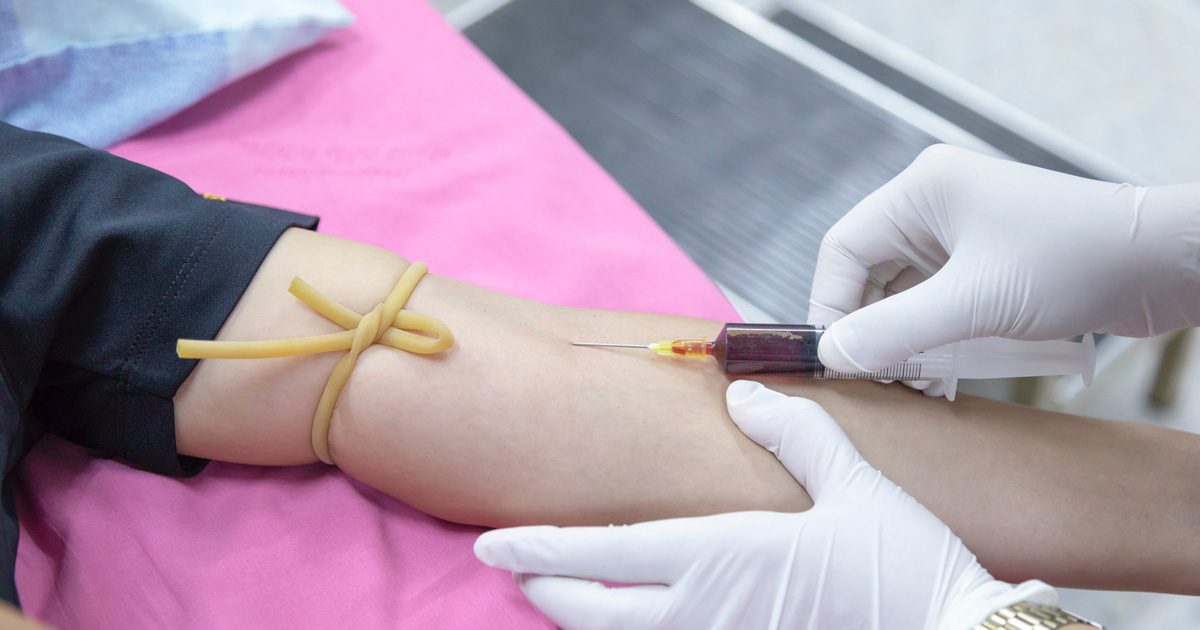
Researchers at St George’s University of London are developing an enzyme replacement therapy for MNGIE (mitochondrial neurogastrointestinal encephalomyopathy), a progressive disorder where patients die at an average age of 35 years. Patients with MNGIE have a defect in the gene that codes for the enzyme, thymidine phosphorylase and results in affected individuals producing insufficient enzyme....