Health Awareness

Fiona Loud
Policy Director, Kidney Care UK

Dr Nick Hartshorne-Evans DUniv BEM
Honorary Doctorate from Glasgow Caledonian University Founder and CEO of the Pumping Marvellous Foundation
This article forms part of a disease awareness campaign commissioned and funded by Boehringer Ingelheim. Fiona Loud and Nick Hartshorne-Evans contributed their expertise to this content. The views expressed are their own.
Heart and kidney health are closely related, so they should not be viewed in isolation. Patients should receive joined-up educational information, personalised care and support.
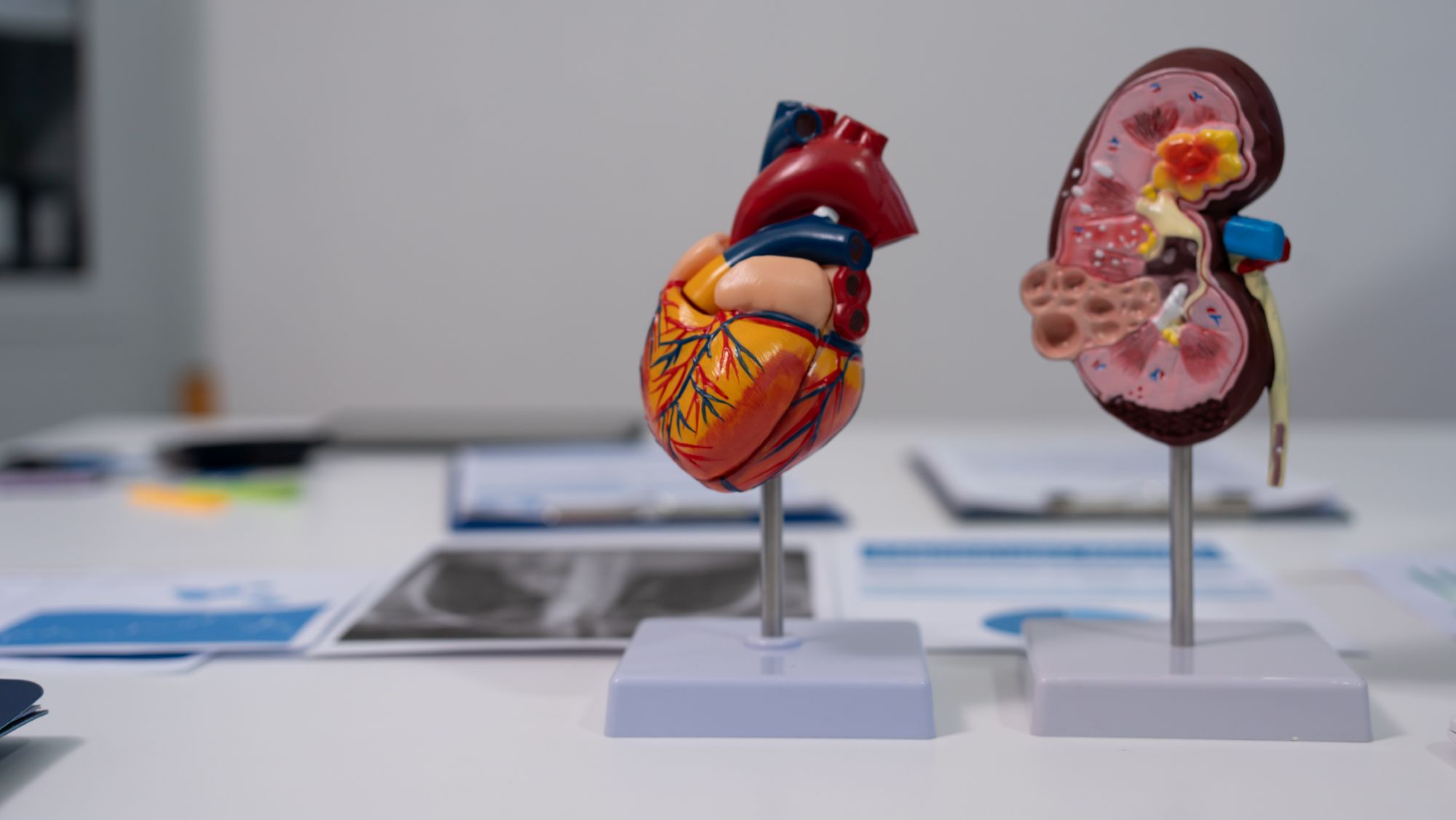
Kidney health and heart health should never be viewed in isolation, explains Fiona Loud, Policy Director at the UK’s leading kidney patient support charity, Kidney Care UK. That’s because both organs are connected through a network of blood vessels, and one can affect the other.
However, your kidneys can decline silently, so finding out how effectively they’re working is a way to pre-empt potential heart problems. “In fact, people with kidney disease are far more likely to experience cardiovascular problems — whether that’s heart failure, heart attack or stroke — before they experience kidney failure,” she says.
High blood pressure could point to kidney disease
Kidney Care UK is currently running a campaign called Bloody Amazing Kidneys where people can understand more about their risk by answering a few simple questions online.
The whole health system can help by treating the person, not just their condition
“For example, high blood pressure could be a sign of kidney disease,” says Loud. “So, get your blood pressure checked at any pharmacy. And if you have a family history of diabetes — which is closely linked with kidney disease and kidney failure — go online and take our health check or ask your GP for a simple blood and urine test.”
Seeing people as individuals — not just treating their condition
Dr Nick Hartshorne-Evans, CEO and Founder of heart failure charity, Pumping Marvellous, seconds Loud’s advice. He stresses that it’s important for people with long-term conditions such as chronic kidney disease (CKD) and heart failure (HF) to receive joined-up educational information from clinicians, charities and patient groups.
And everyone — from patients to healthcare professionals — needs to understand the link between different conditions. “Thankfully, there is a drive for more interconnectivity,” he recognises. “And there’s more interlock between heart and kidney specialists. That continuity can only benefit patients.”
It’s also key for clinicians to see people as individuals and offer them personalised care and support, particularly if they have two or more medical conditions at the same time. “The whole health system can help by treating the person, not just their condition,” concludes Hartshorne-Evans.
NP-GB-108131 | September 2026