Health Awareness
Blood Health 2019
-

The role of digital case discussion in haemophilia care
A virtual ‘grand round’, multidisciplinary input on the go, and clinical support for health workers in developing countries. We explore how digital case discussion can support haemophilia practice. Digital case discussion Case based discussion is central to how clinicians learn and improve their practice, from junior doctors starting their medical career through to experienced consultant...
-

Patient groups are crucial in building an open dialogue with healthcare professionals
Patient groups from around the globe come together in Edinburgh with the clinical research community to share insight on the latest advances in medicine, care and support of chronic lymphocytic leukaemia (CLL) patients. As treatments for chronic lymphocytic leukaemia improve it is important that patient advocates keep pace and build capacity to aid equitable access...
-

Improving care for people with haemophilia globally
The World Federation of Hemophilia (WFH) has been improving care for people with bleeding disorders around the world for the past 50 years. Treatment, care and support for people with bleeding disorders has improved dramatically over this time. Despite improvements, access to quality care continues to be a challenge for many patients around the world....
-

Advancing treatments for haemophilia
Treatment for haemophilia is undergoing a rapid and transformational change thanks to the application of breakthroughs in both science and biotechnology. Without treatment, men and boys with severe haemophilia will bleed, without any injury, repeatedly into joints and muscles, leading to a progressive and disabling arthritis at an early age. To prevent this, state-of-the-art treatment...
-

Bringing biotechnology to Italy – an essential step for rare diseases treatments
The importance of the biotech industry to the growth and competitiveness of the European pharmaceutical sector is fundamental. Today, the majority of innovative medicines – as well as many diagnostic products – are developed or manufactured using biotechnology. Globally, biotech medicines represent 20% of commercialised drugs, 40% of authorised drugs and 50% of drugs under...
-

Putting myeloma on the NHS cancer map
Health policy-makers, pharma companies and the general population all have a role to play in improving prospects for people with incurable myeloma. “A diagnosis of myeloma is an isolating experience,” says Shelagh McKinlay, who heads up patient advocacy at charity organisation Myeloma UK. “Most people have never heard of the disease and most GPs will...
-

It’s an exciting time for the haemophilia community
After standing still for years, the haemophilia treatment landscape has started to look very different, with scientific breakthroughs offering hope to patients and clinicians. For years, treatment for haemophilia has been frustratingly limited, says Brian O’Mahony, President of the European Haemophilia Consortium (EHC), an international non-profit organisation that represents 46 national patients’ organisations of people...
-
s Sponsored
Giving clinicians the confidence to act – in under 3 hours
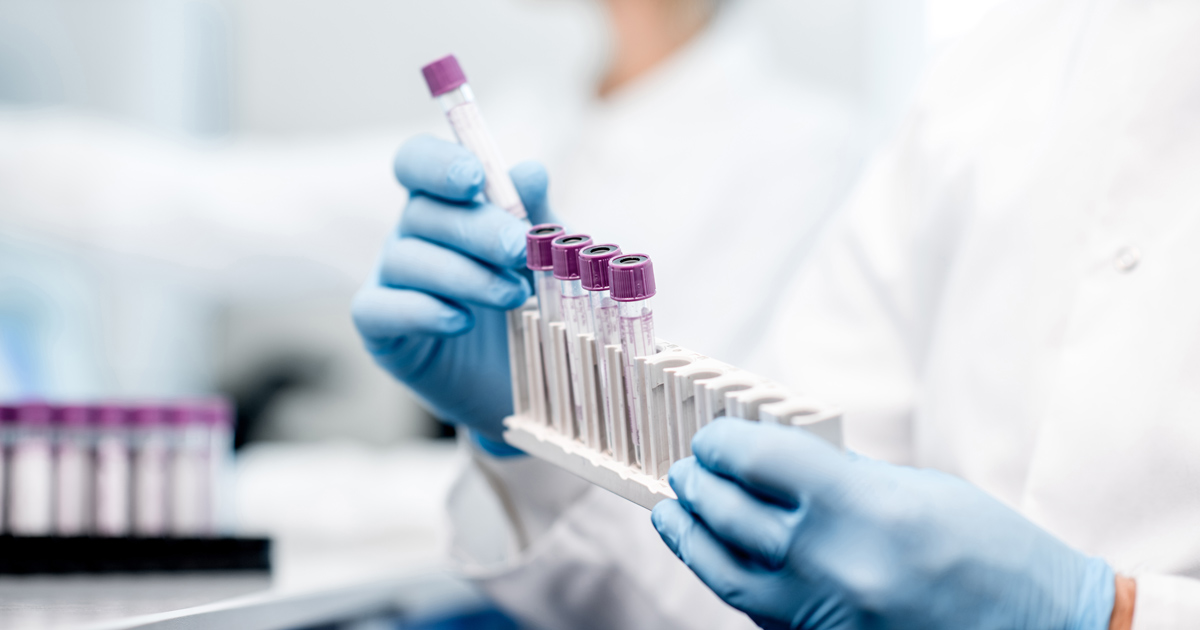
Introducing a new class of product, in which all microorganisms in a whole blood sample can be captured and tested, allowing ultrasensitive detection without hours of culturing. Detection of pathogens causing bloodstream infection (BSI) is critical to improving patient survival from sepsis and impacting antimicrobial stewardship. Clinicians treating patients suspected of sepsis simply do not...
-
Helping the immune system fight blood cancer
For patients with specific blood cancers, CAR-T therapy harnesses their immune system by re-engineering their own white blood cells. Our immune system is there to pinpoint cancer cells and kill them. It has the ability to do this all the time The trouble is, cancer cells can go under the radar of the immune system....
-

Conquer blood diseases
From life-long blood disorders, like sickle cell disease and haemophilia, to sudden, life-altering blood cancer diagnoses like leukaemia or multiple myeloma, blood diseases can be the source of so much uncertainty for patients and their caregivers. Fortunately, there is much to be hopeful for in the understanding and treatment of these disorders. The American Society...
-

Could it be sepsis? And what is post sepsis syndrome?
Sepsis, the UK’s third biggest killer, affects more than 250,000 people in the UK every year. Despite this staggering statistic, awareness is still far too low, and lower still is the awareness of its aftermath. Sepsis is the body’s overreaction to an infection where, instead of fighting an infection, the immune system attacks the body’s...
-

Public awareness is vital to beating blood cancer
In the UK, one in 19 people will be diagnosed with blood cancer, but awareness of the symptoms is shockingly low. Our research has found that only half of adults in the UK can name a single symptom of blood cancer. Blood cancer is the third biggest cancer killer in the UK, with 15,000 people...
-

The future of blood cancer treatment is now
Known as the ‘living drug’ that brings hope to patients with terminal cancer, CAR-T therapy is the most exciting development in cancer treatment in decades. The development of CAR-T began in the late 1970s, but it is only now, almost 40 years later, that it is becoming available in treatment. The therapy takes its name...
-

Removing the toxicity from bone marrow transplant conditioning
A new method of non-toxic bone marrow transplant conditioning promises to transform the treatment of haematological cancers and autoimmune diseases. Blood cancers affect more than 1.1 million people annually in the United States alone. More than 150,000 new cases are expected to be diagnosed this year. Unfortunately, some blood cancers, such as acute myeloid leukaemia...
-

Bone marrow transplant must be a more affordable cure
The high cost of hematopoietic cell transplantation (HCT) is a barrier for people living in undeveloped countries, therefore any efforts to make this procedure more affordable are welcome. Nowadays, there is lot of information regarding the life-saving capacity of haematopoietic cell transplantation (HCT), also known as bone marrow transplantation. Patients worldwide have been treated with...
-

A life-changing vision for haemophilia treatment
This article is intended for readers within the European Union, and not elsewhere. Mediaplanet cannot be held responsible for the misuse of this content. “For too long, people with haemophilia have been living their lives under the shadow of caution and compromise. Now, it’s time for liberation” says Philip Wood, the Head of Haemophilia at...