

Dr. Sophie Loeffert-Frémiot
Microbiology Staff Scientist at Ecolab
Chairperson of the European Normative Commission CEN/TC 216

Clare Nash
Head of Clinical Procurement
Black Country Alliance
Advanced formulae, more scientific evidence and greater accessibility have enabled alcohol-based hand rubs to become a popular choice for both staff and patients – unlocking new opportunities to help the NHS achieve its net zero ambitions.
Supporting sustainable initiatives
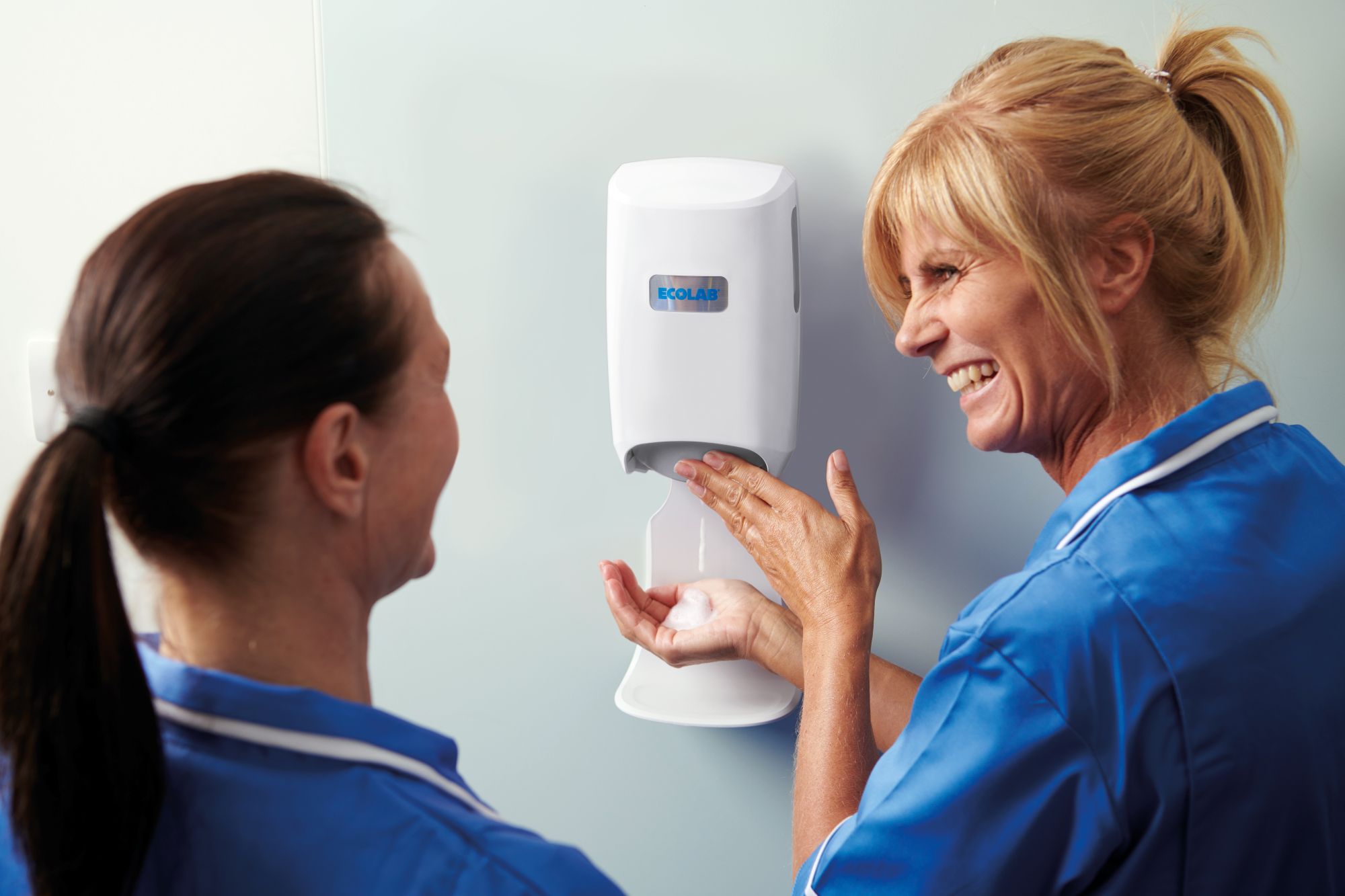
Alcohol-based hand rubs are a quick and effective way to maintain good hand hygiene and ensure compliance with hygiene standards across the NHS, from waiting rooms right into the heart of operating theatres. When used correctly, they provide a safe, waterless solution to remove germs.
Reducing water use is important in spaces like operating theatres, where it’s estimated that a traditional surgical hand scrub can use between 18 and 21 litres of water per person.1,2 Conservative estimates suggest the NHS delivers five million surgical procedures a year. If every surgical team were made up of just four people (and it’s often more), that’s 360 million litres of water every year!
As a global leader in water, hygiene and infection prevention solutions, Ecolab sets ambitious Positive Impact goals3, aiming to help its customers save 1.1 trillion litres of water globally each year by 2030.
At a local level, we work with teams across the NHS to provide evidence-based training, educational tools and best-in-class products to support national initiatives like the Intercollegiate Green Theatre Checklist.4 This checklist combines evidence, guidelines and policies to help surgical teams introduce sustainable changes within their own departments. As recommended in the checklist, surgical teams can use alcohol-based hand rubs to help reduce water and energy consumption in their theatres.4
The importance of compliance
Products used within healthcare are highly regulated and rigorously tested to ensure compliance with technical specifications under a system called European Standards. These standards provide manufacturers with specific codes, which demonstrate that a product has passed testing and can claim certain characteristics.
The latest European Standard, EN 17430, assesses the effectiveness of alcohol-based hand rubs on viruses in a practical test using real volunteers. In healthcare settings, where viruses can spread quickly, this new standard helps to ensure that the most effective products are used. Next time you use a hand sanitiser, look for the EN codes! They will be your guarantee of effectiveness and protection.
Engaging staff with sustainable change
Engaging the NHS with sustainable change involves a multidisciplinary approach. Ecolab works with clinicians, procurement, patient groups and facilities to find practical solutions. We provide a total solution for skin and hand hygiene within the operating theatre and beyond, supporting NHS teams to embed compliance, efficacy and sustainability into their education, training and practice.
Clinical insight from Clare Nash, Head of Clinical Procurement, Black Country Alliance
I’ve been a nurse for more than 35 years and see the significant impact climate change has on population health.
In my own NHS trusts, I’ve supported the move to reusable surgical gowns, lower carbon inhalers and plastic-free patient wipes.
Implementing green projects like the Intercollegiate Green Theatre Checklist can help us to save energy and water, ultimately reducing the carbon impact of care. By working together with our patients, staff and suppliers, we can deliver a more sustainable NHS that will still be here to care for generations to come.
[1] S. F. J. E. Gasson S, “Sustainable Hand Surgery: Incorporating Water Efficiency Into Clinical Practice,” Cureus, vol. 15, no. 4, 2023.
[2] A. V. C. S. e. a. Wormer BA, “The green operating room: simple changes to reduce cost and our carbon footprint.,” The American Journal of Surgery, vol. 79, no. 7, pp. 666-71, 2013.
[3] Ecolab, “2030 Positive Impact,” 2024. [Online]. Available: https://www.ecolab. com/corporate-responsibility/2030-positive-impact.
[4] Intercollegiate Royal Colleges, “Intercollegiate Green Theatre Checklist v2.0,” November 2024. [Online]. Available: https://www.rcsed.ac.uk/policy-guidelines/ sustainability/environmental-sustainability-and-surgery/intercollegiate-green-theatre-checklist.