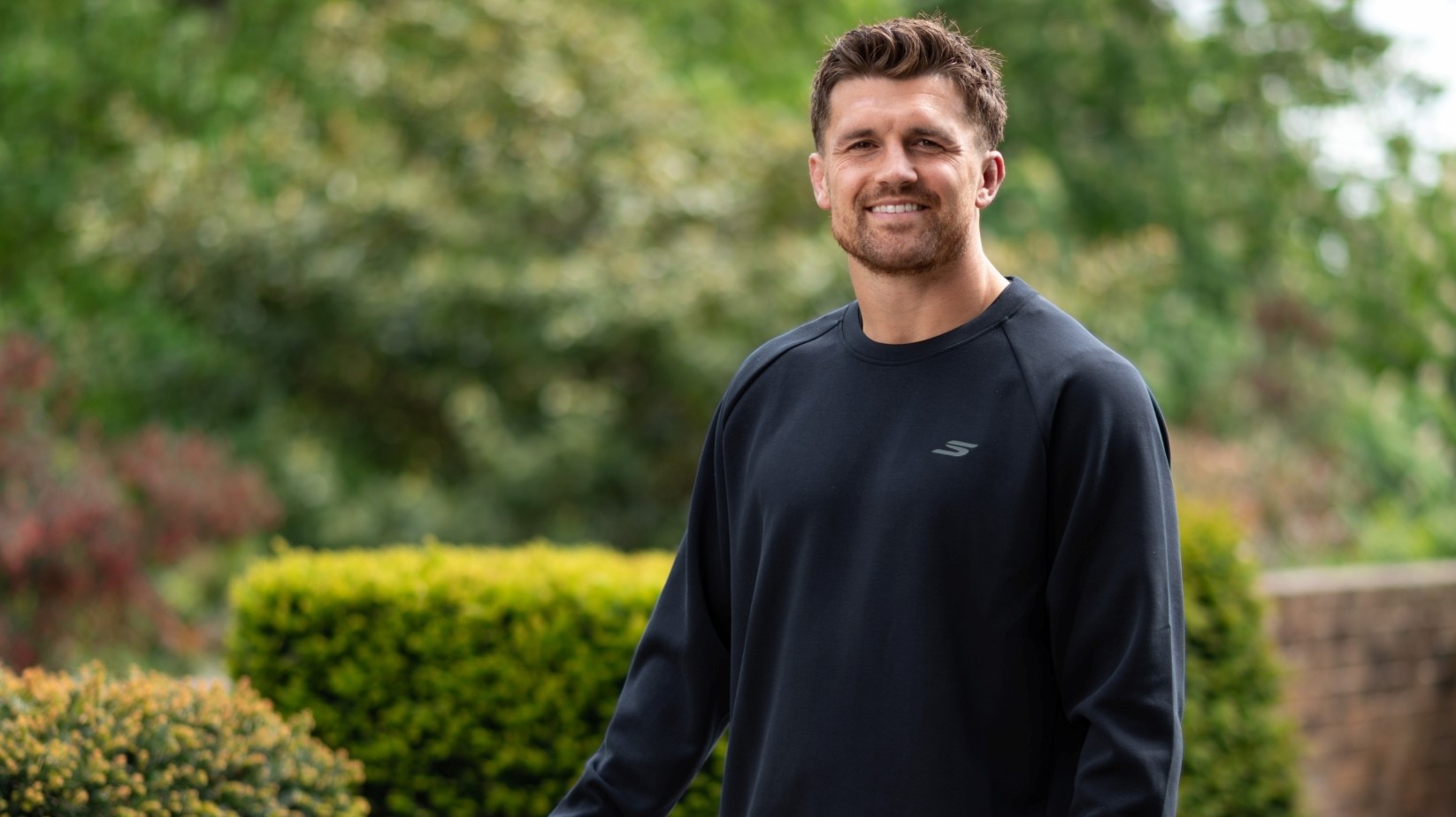



Henry Slade
Exeter Chiefs and England rugby player
England rugby star Henry Slade has lived with type 1 diabetes for 15 years. He and his wife, Megan, talk about how he manages the disease — and the benefits of prompt diagnosis and early detection.
These articles were organised, funded and reviewed by Sanofi UK
Tackle Diabetes is a campaign led by Henry Slade, in a paid partnership with Sanofi, to raise awareness of Type 1 diabetes, address misunderstandings and highlight the value of early detection. When Henry Slade was diagnosed with Type 1 diabetes, he made a pact with himself. He wasn’t going to let it stop him from achieving what he wanted.
Still, it was a shock because he had no symptoms. It started when a friend with the condition came to school with his blood test kit. Henry used it on himself (“as a joke, really”) but was surprised to discover his sugar levels were high.
After undergoing tests, a diagnosis of Type 1 diabetes was confirmed. At the time, he was 18, and a month away from starting his professional rugby career with Premiership Rugby club, Exeter Chiefs.
“I told myself that it wasn’t going to stop me from being a rugby player,” remembers Henry. “You’re dealt cards in life, and you have to deal with what you get. I’ve got diabetes. It’s definitely not the worst thing you can have, and it’s manageable. It was fairly tough, but it was never something where I thought: ‘I can’t do this.’”
The importance of early detection
Nevertheless, reality hit a month later when he applied for a Therapeutic Use Exemption (TUE), which he needed to play sports at his level and use insulin. “The doctor had filled out a lot of the form for me already,” he says. “One section asked: ‘How long will this medication be required for?’ He’d written: ‘Lifelong’. When I read that, I thought: ‘This is me forever.’”
That was 15 years ago. Since then, Henry has played over 200 times for Exeter Chiefs and 73 times for England, most recently in the latest England Six Nations Squad.
In 2025, he partnered with Sanofi to launch the Tackle Diabetes campaign, which aims to improve understanding of the condition, raise awareness of the benefits of early detection and help educate people about the realities of living with Type 1. Apart from insulin injections, Henry’s day-to-day includes finger-prick tests and using a Continuous Glucose Monitor to track his glucose levels in real time.
Henry and his wife, Megan — who have three daughters aged five, two and seven weeks — stress the importance of receiving an early diagnosis. For one thing, it can prevent complications and serious illness.
“Plus, there’s more advice available now, and if you fully understand it, you can get ahead of it and prepare,” says Megan. “Before I met Henry, I knew the basics — but I didn’t know how it affects the person living with it and, in a way, everyone around them. Like, before dinner, I’ll let Henry know because he has to inject 20 minutes before food, so we can all sit down and have a meal together.”
With the right care and support, you can achieve your dreams
Henry’s father has Type 1 diabetes, so the couple are only too aware that a family history is the highest risk factor for developing the disease. “Having just had a baby, our minds are occupied elsewhere, but we would definitely consider having the girls tested when the time is right,” says Megan.
She also reveals that their five-year-old is already asking questions. “They’re still too young to understand, but we’re trying to make it as if nothing’s different.”
Managing his disease is now second nature to Henry, whose advice for anyone newly diagnosed is: Don’t let it stop you chasing your dreams. “It’s a very frustrating disease to have,” he admits. “It’s lifelong, it’s constant 24/7. But as long as you’re diligent and organised with your treatment, you’re no different to anyone else. You can do whatever you want to do.”
For more information about Type 1 diabetes, visit nhs.uk.
Early detection is not currently available on the NHS. You can find out more about studies exploring early detection of type 1 diabetes at elsadiabetes.nhs.uk and t1dra.bristol.ac.uk.
Name Digital version of Henry Slade article for The Guardian Document Number MAT-XU-2602224v1.0 June 2026