
Douglas Martin
Founder and CEO of MiAlgae
Today, premium pet food labels promise sustainable, fish-free and plant-based nutrition. However, not all Omega-3s are equal.
There are three key Omega-3 fatty acids: [1] Alpha-linolenic Acid (ALA); [2] Eicosapentaenoic Acid (EPA); and [3] Docosahexaenoic Acid (DHA). ALA is found in plant oils, while EPA and DHA are the longer-chain fatty acids. While ALA is commonly cited on plant-based pet food labels, it is only useful if converted into EPA and DHA.
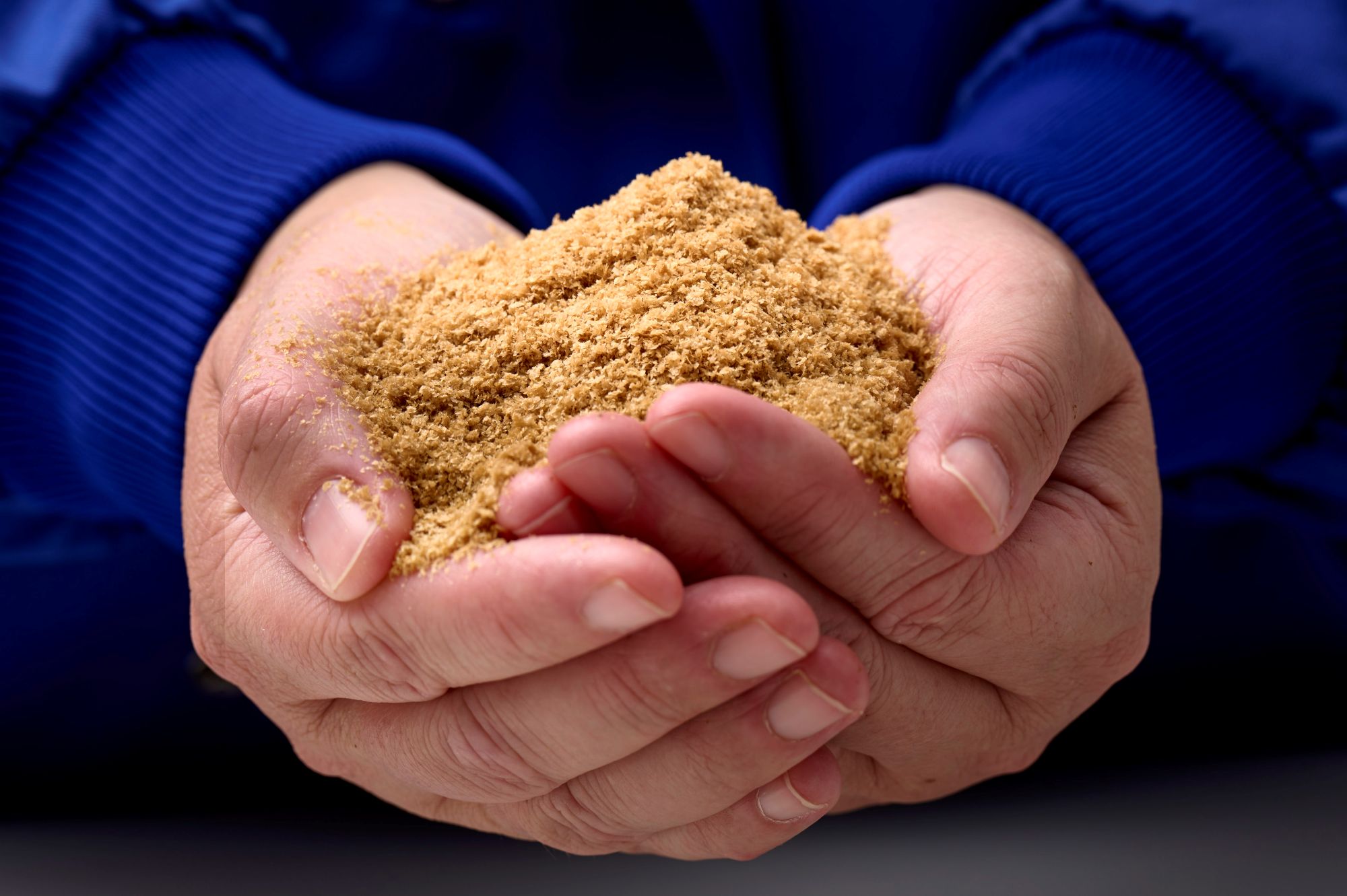
DHA derived straight from algae
Dogs can convert some ALA to EPA (about 10%) but cannot convert that to DHA (under 2%). Cats convert even less. DHA is particularly critical, making up 40% of fatty acids in the brain and 60% in the retina. It also supports neurological development, cognitive health, joint function and cardiovascular wellbeing.1 A label boasting plant-derived Omega-3s from flaxseed can therefore be nutritionally misleading.
It’s a fully traceable, locally produced,
contaminant-free supply chain
Fish oil has historically been the dominant source of marine Omega-3s in pet nutrition. Yet, fish don’t produce DHA — they accumulate it by eating microalgae. Algae is the original source of marine Omega-3s, making algae-derived DHA nutritionally identical to fish oil DHA, with equivalent bioavailability. Therefore, getting DHA directly from algae removes fish as an unnecessary intermediate step.
Choose the right Omega-3 for your pet
Global fish oil supply depends almost entirely on forage fish from fisheries already 90% fully exploited, with projected supply deficits of 20,000 tonnes or more by 2030.2 MiAlgae cultivates microalgae in brewery-like bioreactors powered by renewable energy, using nutrient-rich byproducts from Scottish whisky distilleries. It’s a fully traceable, locally produced, contaminant-free supply chain.
Additionally, fish oil is highly prone to oxidation, with up to 45% of Omega-3 products testing positive for rancidity.3 MiAlgae’s algae-derived DHA is significantly more stable, maintaining nutritional integrity from production to the bowl using specialist packaging. DHA-rich powder has also been shown to be well-accepted and preferred by dogs in palatability testing compared to the control. MiAlgae’s microalgae is plant-based, sustainable, stable, traceable and nutritionally complete, offering premium pet nutrition.
[1] Vondis, 2026. Omega-3 Fatty Acids in Canine Medicine. vondis.co.za/omega-3-fatty-acids/
[2] Open Knowledge Repository, 2017. The Sunken Billions Revisited: Progress and Challenges in Global Marine Fisheries.
[3] Fackelmann, K., 2023. Tests Find Many Popular Omega 3 Supplements Are Rancid.