
Nadia Malliou
President of Pain Alliance Europe – PAE www.pae-eu.eu
PhDc, MSc Cognitive and Experimental Psychologist
Email: [email protected]
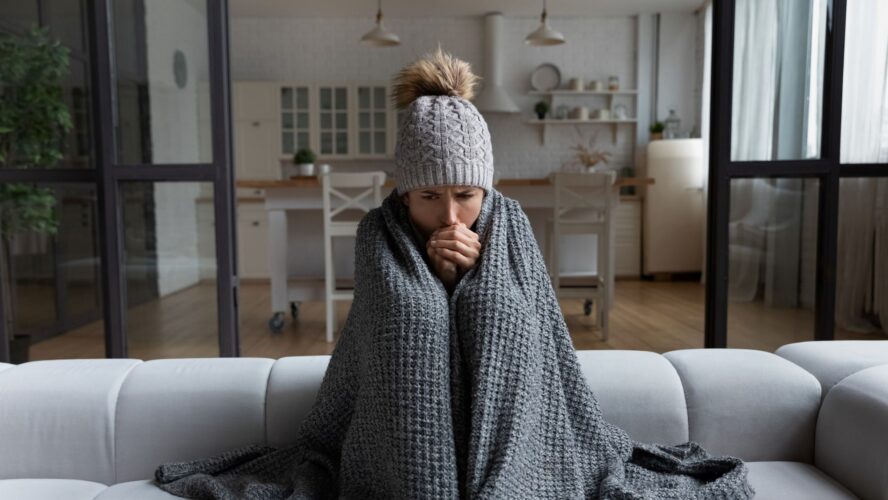
Cold weather and seasonal infections can create trouble for people living with chronic pain. Explore evidence-based tips and lifestyle strategies to help minimise pain this season.
Studies show that drops in temperature and changing barometric pressure are associated with increased pain, stiffness and activity limitations in conditions like osteoarthritis, fibromyalgia and other chronic musculoskeletal syndromes,1 all linked to chronic pain.
Winter also brings higher risks of respiratory and systemic infections (influenza, RSV, SARS-CoV-2), which can trigger inflammation, pain flares or prolonged musculoskeletal symptoms — case series document post-infectious arthralgia and inflammatory arthritis after viral infections, including COVID-19. Therefore, minimising exposure helps reduce pain exacerbations2.
Evidence-based winter preparedness tips
Evidence-based winter preparedness includes vaccination (influenza, pneumococcus, seasonal boosters). Older adults may benefit from enhanced formulations. Vaccination lowers infection risk and downstream pain flares. Medication continuity is essential: keep analgesics and disease-modifying treatments updated. Also, confirm your treatment plans with clinicians before winter. Infection-control measures — hand hygiene, avoiding crowded, poorly ventilated spaces during peaks3 — remain simple but effective. Immunocompromised adults may be affected harder by influenza4 and consequently be exposed to more pain flares.
Vaccination lowers infection risk and downstream pain flares.
Practical steps to minimise pain
Lifestyle strategies also matter. Layer clothing, use local heat (warm baths, packs) to ease stiffness and maintain gentle activity to preserve mobility.
Prioritise sleep and hydration. Avoid excessive alcohol, which creates a false sense of warmth, lowers core temperature and raises hypothermia risk5. Choose warm non-alcoholic drinks and stay active to generate internal heat. Plan for assistance with errands during severe weather to avoid falls or overexertion. Check batteries and the condition of assistive devices before winter1.
If a person living with chronic pain notices unusual worsening of pain after an infection, new joint swelling or prolonged symptoms, they should contact their healthcare provider. Early assessment can distinguish a transient flare from an inflammatory process that needs treatment. Being proactive about vaccination, infection avoidance, medication continuity and sensible winter self-care reduces risk and helps people with chronic pain stay safer and more comfortable through the season. In this way, weathering the cold becomes easier, with pain kept at low and manageable levels.
[1] Jevotovsky, D.S. et al. Weathering the Pain: Ambient Temperature’s Role in Chronic Pain Syndromes. Curr Pain Headache Rep 29, 31 (2025). https://doi.org/10.1007/s11916-025-01361-8
[2] Yadav S, et al. Inflammatory Arthritis After COVID-19: A Case Series. Am J Case Rep. 2023 Jun 27;24:e939870. DOI: 10.12659/AJCR.939870
[3] Grohskopf LA, et al. Prevention and Control of Seasonal Influenza with Vaccines: Recommendations of the Advisory Committee on Immunization Practices — United States, 2025–26 Influenza Season. MMWR Morb Mortal Wkly Rep 2025;74:500–507. DOI: http://dx.doi.org/10.15585/mmwr.mm7432a2
[4] Collins JP, et al. Outcomes of Immunocompromised Adults Hospitalized With Laboratory-confirmed Influenza in the United States, 2011-2015. Clin Infect Dis. 2020 May 6;70(10):2121-2130. doi: 10.1093/cid/ciz638
[5] Health Service Executive. HSE. (2025). Keeping warm in winter. Available at: https://www2.hse.ie/living-well/winter/keeping-warm-in-winter/