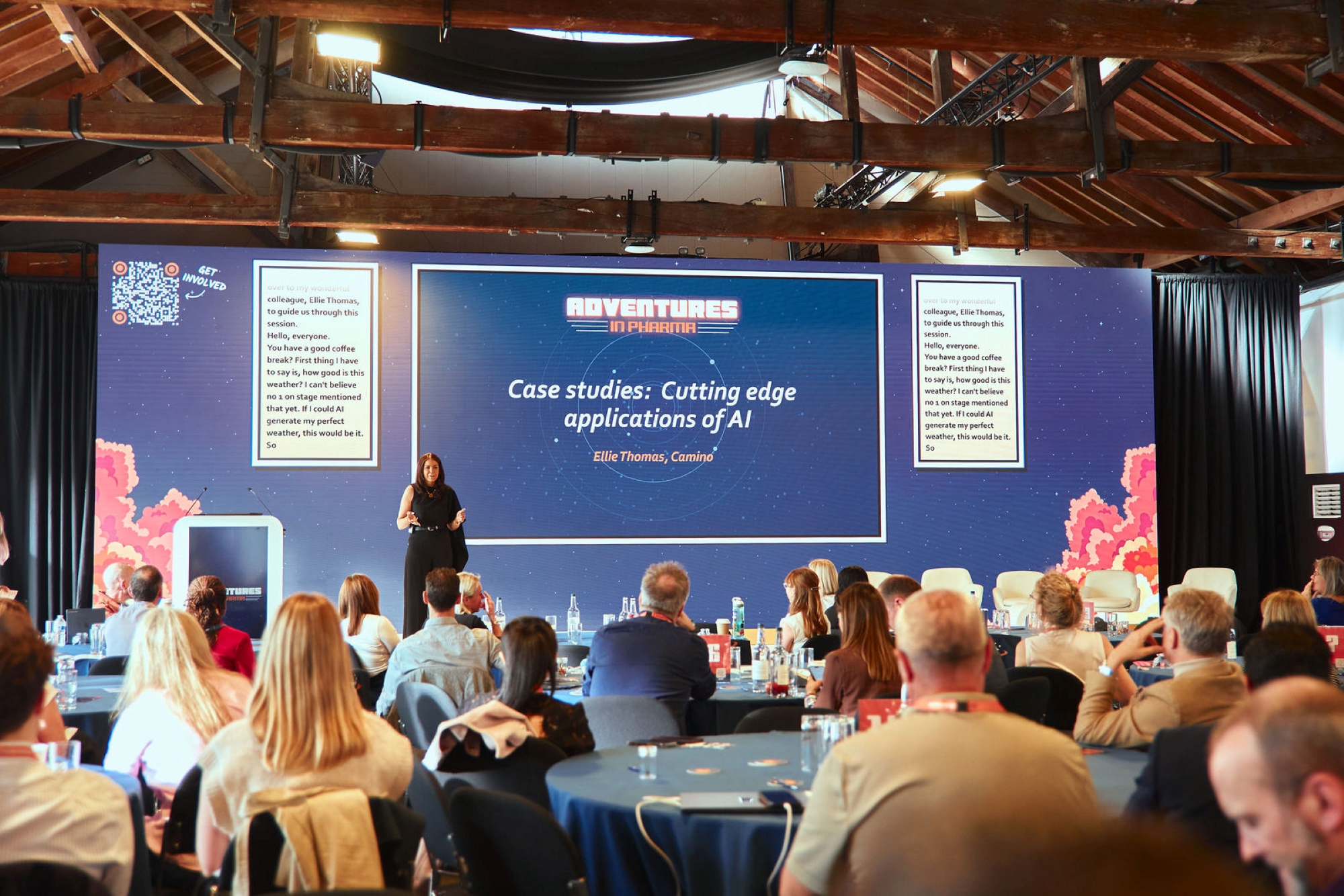

Ellie Thomas
CCO & Rare Disease Lead, Camino
AI is already reshaping rare disease diagnosis. What if it could do the same for how we communicate with patients and healthcare professionals?
A breakthrough year
AI has enabled remarkable progress in rare disease. Among the advances in the last 12 months, AI can now: score genetic variants to flag likely disease causing mutations;¹ explore clinical data and literature to suggest possible diagnoses, showing its reasoning;² and reanalyse old genomic data to find cases that were missed.³ All of this is helping hunt down causes behind conditions undiagnosed for years. It’s published, peer reviewed and already changing outcomes.
Communications: playing catch-up
When it comes to using AI to support how we engage patients and healthcare professionals about rare diseases, we’re miles behind. The possibilities are huge for a field with over 7,000 conditions, where expertise is precious and resources are stretched.
A few examples: patient materials that adapt to reading age, language and where someone is on their journey, instead of one leaflet trying to speak to everyone at once; a monitoring tool for healthcare professionals that accounts for how differently a condition can present from patient to patient; or an AI avatar that can help a newly diagnosed family at 2 am, when the specialist nurse has gone home, answering questions that can’t wait and steering them away from whatever misinformation a late-night Google search throws up. How amazing would that be?
Start small, listen to the rare disease community
about what they need
Human first, always
Sounds great in principle. Yet, nothing, avatars least of all, can replace a clinician’s judgement or human interaction. Rare disease runs on empathy and nuance, and it always should. With the right care and expertise, though, AI can help us reach more patients and clinicians, and engage them better, with greater impact. Getting there means pharma and biotech leaning into what’s next.
We don’t need to reinvent everything overnight.
Start small, listen to the rare disease community about what they need. Then, reach for appropriate intelligence – the right blend of AI and human expertise. That means AI driving efficiency and innovation, making possible what wasn’t before and people bringing the insight and compassion no algorithm can replicate. At Camino, we’re already working alongside the teams brave
enough to take that first step. The opportunity is there. Who’s joining us?
Camino is a medcomms agency with specialist expertise in rare disease and practical applications of AI in pharma. Find Ellie on LinkedIn, or scan for tickets to our Adventures in Pharma® event adventures inpharma.com
[1] Orenbuch, R. et al. Nature Genetics. 2025;57:3165–3174.
[2] Zhao, W. et al. Nature. 2026;651:775–784.
[3] Welland, M.J. et al. Nature Medicine. 2026;32:2991–2999.