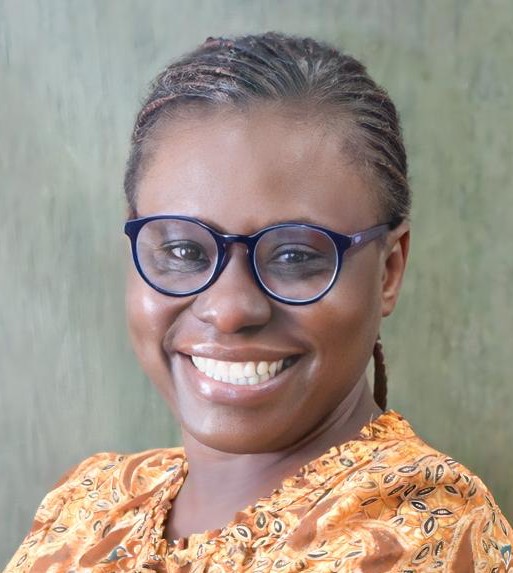
Trudy Nyakambangwe
Executive Director, Rare Disorders Zimbabwe (RDZ)
The WHA Resolution on rare diseases is historic. In Southern Africa, translating it into care means building from the ground up.
In Zimbabwe, a family can wait several years to receive a diagnosis, not only because genetic testing is scarce, but because rare conditions are still widely attributed to curses or family wrongdoing. That stigma delays diagnosis as much as any shortage of specialists. Health systems were not built with them in mind, and the impact is sharpest in low- or middle-income countries (LMICs).
A resolution written with the world, not just for it
In May 2025, the World Health Assembly adopted the first-ever resolution on rare diseases, sponsored by Egypt and Spain and co-sponsored by 39 other member states. It designates rare conditions as a global health priority and mandates that the World Health Organization develop a comprehensive 10-year Global Action Plan for Rare Diseases by 2028. Only a handful of African countries co-sponsored the text, but Southern Africa’s voice in implementation cannot be an afterthought. Rare Diseases International, together with its member organisations, including Rare Disorders Zimbabwe, has made building and strengthening registries and evidence from LMICs a strategic priority for exactly this reason.
seven of nine provinces have no genetic services,
meaning that families often travel hundreds of kilometres just for a diagnosis
What implementation looks like on the ground
In Southern Africa, access to genetic services remains highly uneven – for example, seven of nine provinces have no genetic services, meaning that families often travel hundreds of kilometres just for a diagnosis. Community-led referral networks can close that gap; connecting rural clinicians to genetic clinics by WhatsApp, and training community health workers to offer counselling and follow-ups.
Diagnosis is only half the picture: sickle cell disease can be managed with an inexpensive drug, yet most African patients still never receive it – lacking a clear pathway from diagnosis to treatment. Equitable access should be designed locally, not imported, given the region’s unique complexities.
The global action plan must be built from here
The Resolution is a floor, not a ceiling. As the WHO drafts the Global Action Plan, LMIC-designed models like ours must inform it directly, not simply receive it once written. That means sustained funding, South-South learning between African rare disease organisations and registries that count LMIC patients, not just cite them.
Facts used: WHA78 resolution “Rare Diseases: a global health priority for equity and inclusion,” adopted 24 May 2025, sponsored by Egypt and Spain, co-sponsored by 39 Member States; WHO directed to develop a 10-year Global Action Plan (GAPRD) by WHA81, 2028; ~300 million people living with a rare disease worldwide (WHO/resolution figure). Statistic on genetic services access — “seven of the nine [South African] provinces do not have Genetic Services” — from Prof Shahida Moosa (Stellenbosch University / Division of Molecular Biology and Human Genetics), “South Africans with rare diseases still being left behind,” published in Health24, 28 February 2022 (republished by Stellenbosch University). Sickle cell/hydroxyurea treatment-gap point drawn from Luzzatto & Makani, “Treating Rare Diseases in Africa: The Drugs Exist but the Need Is Unmet,” 2022 (PMC8784510). RDI’s LMIC registry and regional-alliance priorities drawn from the RDI Strategic Framework 2026–2030 and RDI 2026 Action Plan.